
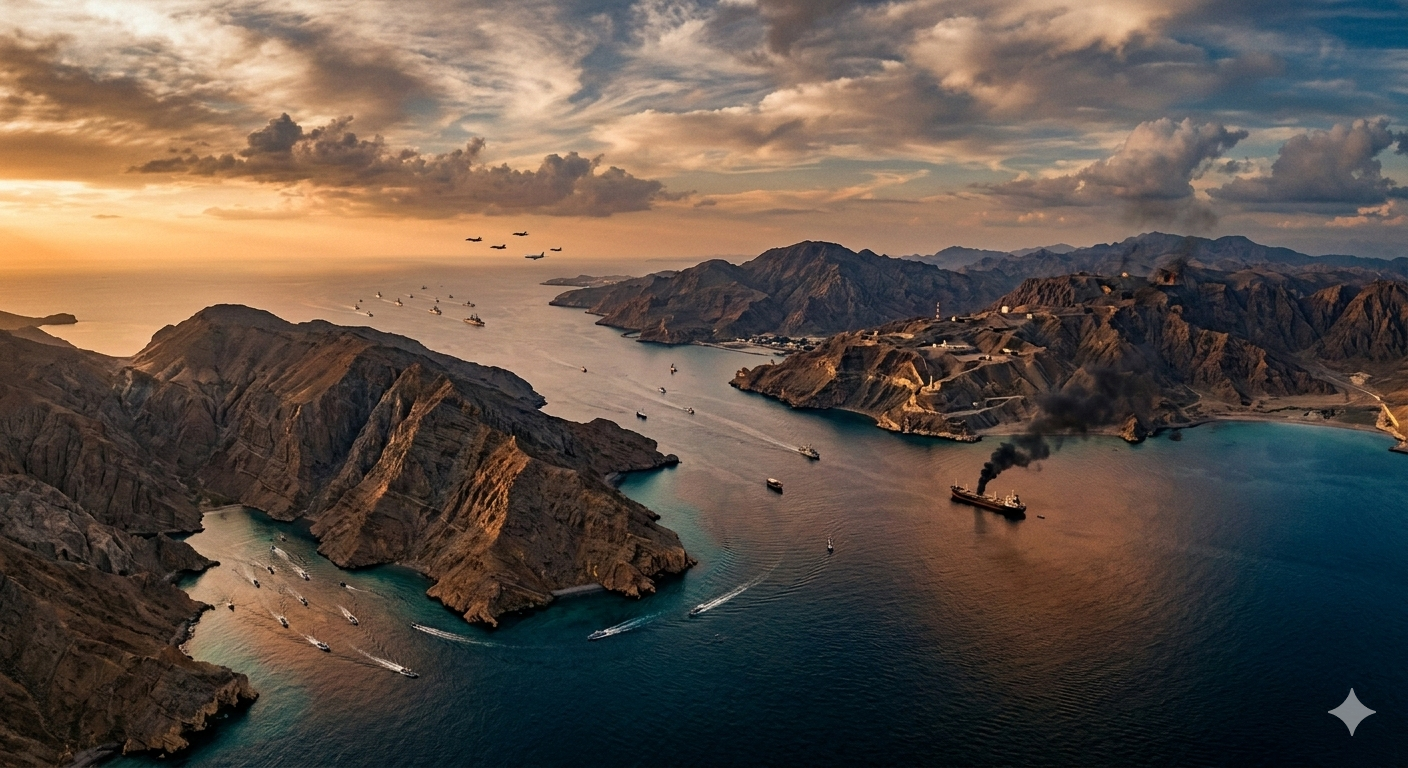
The Strait of Hormuz has closed.
It is having significant global implications, especially for oil markets.
The Strait of Hormuz is a narrow, strategically important waterway between Iran and Oman, through which about 20% of the world’s petroleum passes, including oil from major producers like Saudi Arabia, Iraq, and the UAE.
The closure could lead to a sharp rise in oil prices, disruptions in global trade, and heightened geopolitical tensions in the region.
As of March 3, 2026, the Strait of Hormuz is in a state of effective closure, though its legal status remains a point of contention between Iran and the West.
Following a major escalation in the regional conflict on February 28—which included U.S. and Israeli strikes on Iranian leadership—Iran’s Revolutionary Guard (IRGC) officially declared the waterway closed on March 2. They have issued stern warnings that any vessel attempting to transit will be “set ablaze.”
| Category | Impact Details |
| Oil Prices | Brent crude has spiked by over 10%, with analysts warning of a surge toward $120/barrel if the blockade persists. |
| Energy Supply | The strait carries roughly 20% of the world’s daily oil supply and a significant portion of global LNG (particularly from Qatar). |
| Trade Routes | Ships are being rerouted around Africa’s Cape of Good Hope, adding weeks to transit times and significantly increasing freight costs. |
Emergency Statements: UN General Council Meeting
In the emergency sessions held on February 28 and March 2, 2026, the UN Security Council (UNSC) was deeply fractured, reflecting the gravity of the escalation. While the Council failed to pass a formal resolution due to the U.S. veto power, the statements made by key figures underscore a world “on the brink.”
Key Figure: Secretary-General António Guterres
The Secretary-General delivered a somber warning, describing the situation as a “grave threat to international peace and security.”
- The “Squandered” Diplomacy: He explicitly expressed regret that the strikes occurred just as indirect talks in Oman were progressing toward a potential technical meeting in Vienna.
- Condemnation of All Sides: Guterres condemned the initial U.S.-Israeli strikes as a violation of international law and the UN Charter. However, he also strongly condemned Iran’s retaliatory strikes against neighboring Gulf states (Bahrain, UAE, Saudi Arabia, etc.) as violations of sovereignty.
- The “Chain of Events”: He warned that the military actions risk “igniting a chain of events that no one can control in the most volatile region of the world.”
Stance of the Permanent Members (P5)
| Member | Summary of Position |
| United States | Ambassador Mike Waltz argued the strikes were “lawful self-defense” under Article 51. He insisted the goal was to prevent Iran from ever acquiring a nuclear weapon and to “dismantle naval assets used to disrupt international shipping.” |
| Russia | Ambassador Vassily Nebenzia called the attacks a “premeditated and unprovoked act of armed aggression” against a sovereign state. He accused the West of attempting to forcibly “determine the political future” of Iran. |
| China | Ambassador Fu Cong described the operation as “brazen” and a violation of Iranian sovereignty. China called for an immediate cessation of hostilities and warned of a global “humanitarian and economic catastrophe.” |
| United Kingdom | Taking a “moral clarity” approach, the UK supported the U.S. position on Iran’s nuclear threat but emphasized that regional stability must remain a priority, noting they played no direct role in the February 28 strikes. |
| France | Acted as the bridge, requesting the emergency session while condemning both the escalation of the Iranian nuclear program and the “dangerous” turn toward full-scale war. |
The Maritime & Economic Warning
The International Maritime Organization (IMO) Secretary-General, Arsenio Dominguez, also issued a critical emergency statement:
- “No Justification”: He stated that “no attack on innocent seafarers or civilian shipping is ever justified.”
- Safety Directive: He officially urged all shipping companies to suspend transits through the Strait of Hormuz until safety could be guaranteed, citing reports of seafarer fatalities and injuries.
- Warning on Disinformation: He specifically warned mariners against “misleading information and orders” being broadcast by Iranian sources over VHF radio frequencies in the strait.
Current Legal Deadlock
Because the U.S. maintains the strikes were a matter of “global security” and uses its veto to block any resolution condemning the action, the UN remains legally paralyzed. Meanwhile, Iran has notified the Council that it considers itself in a state of “lawful self-defense” and will continue to restrict the strait as a military measure.
Sources:
- Reuters / Daily Sabah: (March 2, 2026) – “Iran says Strait of Hormuz closed, will torch ships trying to pass.” This report details the IRGC commander’s official declaration and the drone strike on the tanker Athe Nova.
- The Times of Israel: (March 2, 2026) – “Iran’s Revolutionary Guards declare Strait of Hormuz closed.” Provides context on the strike that killed Supreme Leader Ayatollah Ali Khamenei as the catalyst for the closure.
- The Guardian: (March 2, 2026) – “Gas prices soar and oil jumps as Iran war pushes down global stock markets.” Covers the 13% spike in Brent crude and the potential for prices to exceed $100/barrel.
- The Independent: (March 2, 2026) – “Oil prices soar as Iran’s attack on ships… raise fears of wider economic shock.” Highlights the impact on Asian markets and the “effective halt” of 15 million barrels per day.
Maritime & Intelligence Sources
- Windward AI Maritime Intelligence: (March 2, 2026) – “Iran War Maritime Intelligence Daily.” Confirms that tanker traffic has “functionally stopped” and provides data on hundreds of vessels holding position in the Gulf of Oman.
- Lloyd’s List: (March 1–2, 2026) – “Tankers shun Strait of Hormuz as total vessel traffic plunges.” Reports an 81% collapse in vessel transits and confirms the “de-facto” closure.
- gCaptain / Anadolu Agency: (March 2, 2026) – “Gulf War Risk Insurance Pulled as Reinsurers Exit.” Details the 72-hour cancellation notices issued by major P&I Clubs (Gard, Skuld, NorthStandard) taking effect March 5.
Industry & Economic Analysis
- Wood Mackenzie: (March 2, 2026) – “Oil prices could hit $100/bbl as Strait of Hormuz traffic halts.” Analyzes the disruption to 20% of global LNG supply and the competition between Asia and Europe for remaining cargoes.
- Hapag-Lloyd Official Advisory: (February 28, 2026) – “Suspension of Strait of Hormuz Transits Due to Security Closure.” Official corporate notice of all vessel suspensions in the region.
- UK House of Commons Library: (March 2, 2026) – “US-Israel strikes on Iran: February/March 2026.” Provides the geopolitical background, including the failure of nuclear talks and the formation of Iran’s transitional council.
Leave a Reply